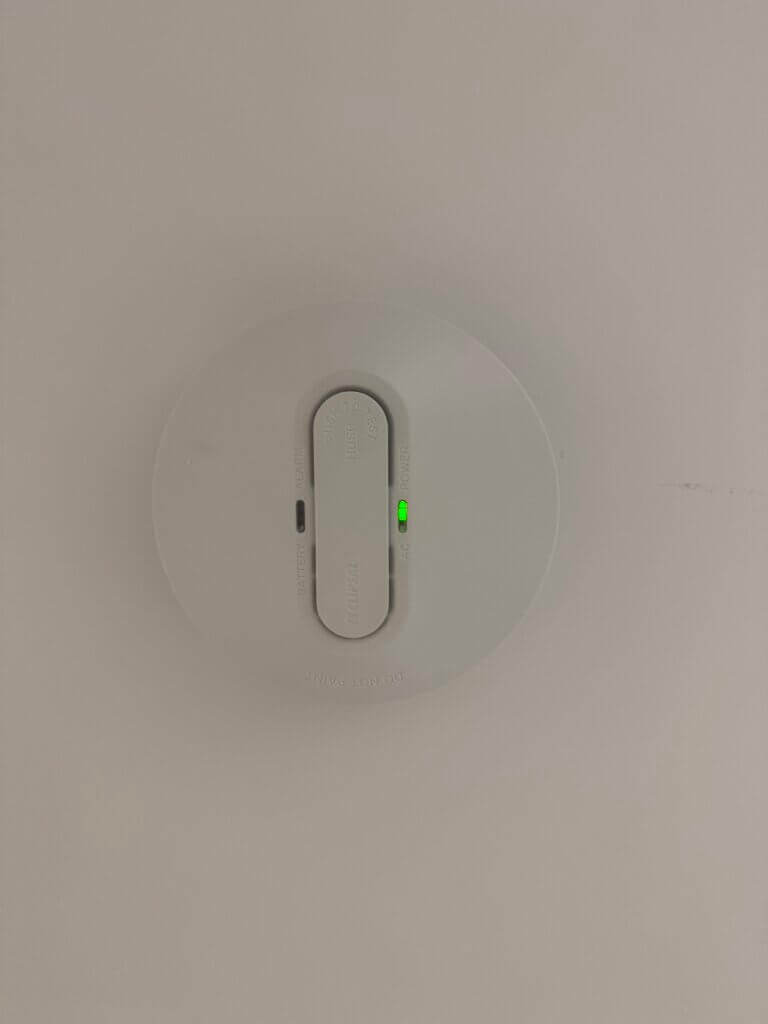
Hard-Wired Smoke Alarm Beeping? Why It Happens and How to Stop It (2026)
Quick answer: a hard-wired smoke alarm that chirps once every 30–60 seconds is nearly always saying its backup battery is flat or the alarm has reached end of life (10 years from the date on the back). Replace the 9 V battery; if it's a sealed alarm or it keeps chirping with a fresh battery, replace the alarm. Chirping after a power cut or storm usually stops when the mains returns. Dust, steam and insects cause the random full alarms. Never disconnect a hard-wired alarm permanently — silence it, fix the cause, or have it replaced.
The 2am chirp is a Perth classic: it's always the alarm on the highest ceiling, it's always winter, and the battery in the kitchen drawer is always the wrong size. This guide sorts the chirps from the alarms, gives you the fixes in order, and says plainly when the alarm needs replacing and when the wiring behind it needs a look.
What the beeps mean
| Sound | Meaning | Fix |
|---|---|---|
| One chirp every 30–60 seconds | Low backup battery | Replace the 9 V battery; sealed alarms — replace the alarm |
| One chirp every 30–60 seconds with a new battery | End of life (10 years) or a fault | Check the date on the back; replace the alarm |
| Chirping after a blackout or storm | Mains lost, backup running low | Wait for power; if it continues, replace the battery |
| Three loud beeps, repeating | Smoke detected | Check for fire, then for steam, cooking or dust |
| Continuous loud alarm | Smoke, or a fault in older alarms | Check for fire; silence and clean; replace if it recurs |
| Random full alarms at night | Dust, insects, humidity, a failing sensor | Vacuum the alarm; replace if it continues |
| All alarms sounding together | Interconnected alarms — one has detected smoke | Find the one with the flashing red light; it's the trigger |
| Chirp only at night | Cold air drops battery voltage below the threshold | Replace the battery — it's on its way out |
How to stop the chirp, in order
- Find the alarm that's chirping. With several alarms it's often not the one you think; stand under each for a minute, or look for the one whose light flashes with the chirp.
- Press the test/hush button for a few seconds. On many alarms this silences a low-battery chirp for a few hours and resets a nuisance alarm.
- Replace the backup battery. Twist the alarm off its base (or open the battery door), remove the 9 V battery, fit a new one — not one from the drawer — and refit. Press test.
- Check the date on the back. Manufactured more than 10 years ago? The chirp is the end-of-life signal and it needs replacing. Sealed 10-year alarms can't take a new battery; replace the unit.
- Check the power. Is the green mains light on? If not, check the lighting circuit's breaker or RCD at the switchboard; hard-wired alarms usually run off a lighting circuit.
- Clean it. Vacuum the vents gently; dust and small insects cause chirps and false alarms.
- Still chirping? It's the alarm (a failed sensor) or the wiring (a loose connection at the base, a broken interconnect). That's a licensed electrician's job.

Need an Electrician in Perth?
BOOK ONLINE TODAY
What not to do
- Don't pull the alarm off and leave it off. A disconnected alarm is how people die in house fires, and in a rental it puts the landlord in breach.
- Don't remove the battery and leave it out — the chirp continues on most alarms anyway, and you've lost the backup.
- Don't paint over it or spray insect surface spray on it.
- Don't try to repair a hard-wired alarm. They're replaced, not repaired, and the wiring behind them is licensed work in WA.
When it needs replacing
- Past 10 years from the manufacture date (the standard treats the alarm as expired).
- Chirps with a new battery, or doesn't sound on the test button.
- False alarms that continue after cleaning.
- Yellowed, cracked, painted, or been through a fire or flood.
- An ionisation alarm — photoelectric alarms respond faster to smouldering fires and are what fire services recommend.
- Battery-only alarms in a home about to be sold or rented — WA requires mains-powered ones.
A like-for-like hard-wired replacement is $180–$250 in Perth; a set of interconnected alarms $600–$900. Prices and the WA rules are in our smoke alarm cost guide.
WA's smoke alarm rules in brief
- Homes sold, rented or hired must have mains-powered alarms, under 10 years old, to AS 3786, in every hallway serving bedrooms and on every storey; interconnected where the building permit dates from 1 May 2015 or later.
- Landlords must keep alarms working throughout a tenancy — a chirping alarm in a rental is the landlord's job to fix, promptly.
- Replacing a hard-wired alarm is electrical work for a licensed electrical contractor (our licence is EC15449).
Our WA compliance checklist has the detail, and our smoke alarm testing guide covers the monthly routine that stops the 2am chirp in the first place.
How Web X can help
- Chirping or false-alarming hard-wired alarms diagnosed and replaced — photoelectric, 10-year backup battery, interconnected where required.
- Fixed price, $0 call-out fee; often same-day, and bundled with any other small job.
- RCD and smoke alarm compliance check with certificate for a sale or tenancy: $199 fixed.
- Licensed electrical contractor EC15449, 300+ five-star Google reviews. See our smoke alarm service.
We service smoke alarms across the Perth metro — Joondalup, Morley, Canning Vale, Rockingham, Midland, Ellenbrook and everywhere between.
Frequently asked questions
Why is my hard-wired smoke alarm beeping every 30 seconds?
A low backup battery in nine cases out of ten; end of life in the tenth. Replace the 9 V battery; if it's sealed or keeps chirping, check the date on the back and replace the alarm.
Why does it chirp even though it's hard-wired?
Hard-wired alarms carry a backup battery for power cuts, and the chirp is the battery warning. Mains power doesn't stop it.
How do I silence a smoke alarm?
Press and hold the test/hush button. That silences a nuisance alarm and pauses a low-battery chirp for a few hours — then fix the cause, because it comes back.
Why does the alarm go off at night for no reason?
Dust or insects in the sensor, humidity, or a sensor at end of life. Vacuum the vents; if it continues, replace the alarm. Cold nights also push a weak battery below its threshold, which is why chirps start at 2am.
Can I disconnect the alarm until I get a new one?
Silence it and replace the battery, but don't leave it disconnected — and in a rental, the landlord must fix it promptly. A replacement is a quick fixed-price job.
Do I need an electrician to replace a hard-wired smoke alarm?
Yes, in WA. The alarm connects to the lighting circuit and the interconnect wiring; a licensed electrical contractor replaces it and issues the certificate. Changing the battery you can do yourself.
How long do hard-wired smoke alarms last?
Ten years from the manufacture date. After that the sensor is unreliable, the alarm starts chirping, and it's non-compliant for a sale or tenancy.

Written by Donny Mobin, licensed electrical contractor (EC15449) and owner of Web X Electricians Perth. Written from the smoke alarm call-outs we do across the Perth metro area; prices are our own 2026 prices, including GST.
Last updated 16 September 2026.
Alarm chirping and a new battery hasn't fixed it?
Call 0422 117 839 or book online. Fixed price, $0 call-out fee, photoelectric replacement with the certificate. More on our smoke alarm service.