
How Much Does It Cost to Run Power to a Shed in Perth? (2026 Prices)
Quick answer: in Perth in 2026, running power to a garden shed — one underground circuit for lights and a couple of power points, 10–20 m from the house — costs $900 to $1,600. A workshop shed with its own sub-board, lights, several power points and a 15 A or 32 A outlet is $1,800 to $3,500. Long runs, three-phase, or trenching through paving and concrete push it higher, and an old fuse board at the house adds a switchboard upgrade.
Our own Perth prices, including GST and the Electrical Safety Certificate. Fixed price after a look, $0 call-out fee.
An extension lead across the lawn is how most Perth sheds get their power, and it's how a lot of them get their fires and RCD trips too. Doing it properly — underground conduit, a circuit or a sub-board sized for what you'll actually run, RCD protection and proper outdoor gear — costs less than people expect on a normal block, and it turns a shed into a workshop, a studio or a gym. This guide covers what it costs in 2026, the two ways to do it, what's done, and the rules.
Shed power estimator (Perth, 2026)
Pick the options that match your shed and block. The range is what we'd expect to quote before a look; the fixed price follows a site visit, because the trench route decides a lot.
Shed power costs in Perth in 2026
| Job | Typical Perth price (2026) | Notes |
|---|---|---|
| Garden shed: one circuit, lights and two power points, under 15 m | $900 – $1,600 | Underground conduit, RCBO at the house board, LED batten, weatherproof gear |
| Workshop shed: sub-board, lights, 4–6 points, 15 A outlet | $1,800 – $2,800 | Sub-main from the house, small board with main switch and RCBOs |
| Heavy workshop: sub-board with a 32 A outlet or welder circuit | $2,200 – $3,500 | Heavier sub-main; single- or three-phase |
| Granny flat or studio: sub-board, aircon, cooking and hot water circuits | $3,000 – $6,000 | Often needs the house board upgraded and a maximum-demand check |
| Add: 15–30 m run | +$250 – $600 | Cable, conduit and trench |
| Add: 30–60 m run | +$700 – $1,500 | Larger cable to keep voltage drop within limits |
| Add: trench through paving or concrete | +$200 – $1,500 | Lifting and relaying pavers, cutting concrete, or boring under a drive |
| Add: three-phase to the shed | +$600 – $1,500 | Where the house already has three-phase supply |
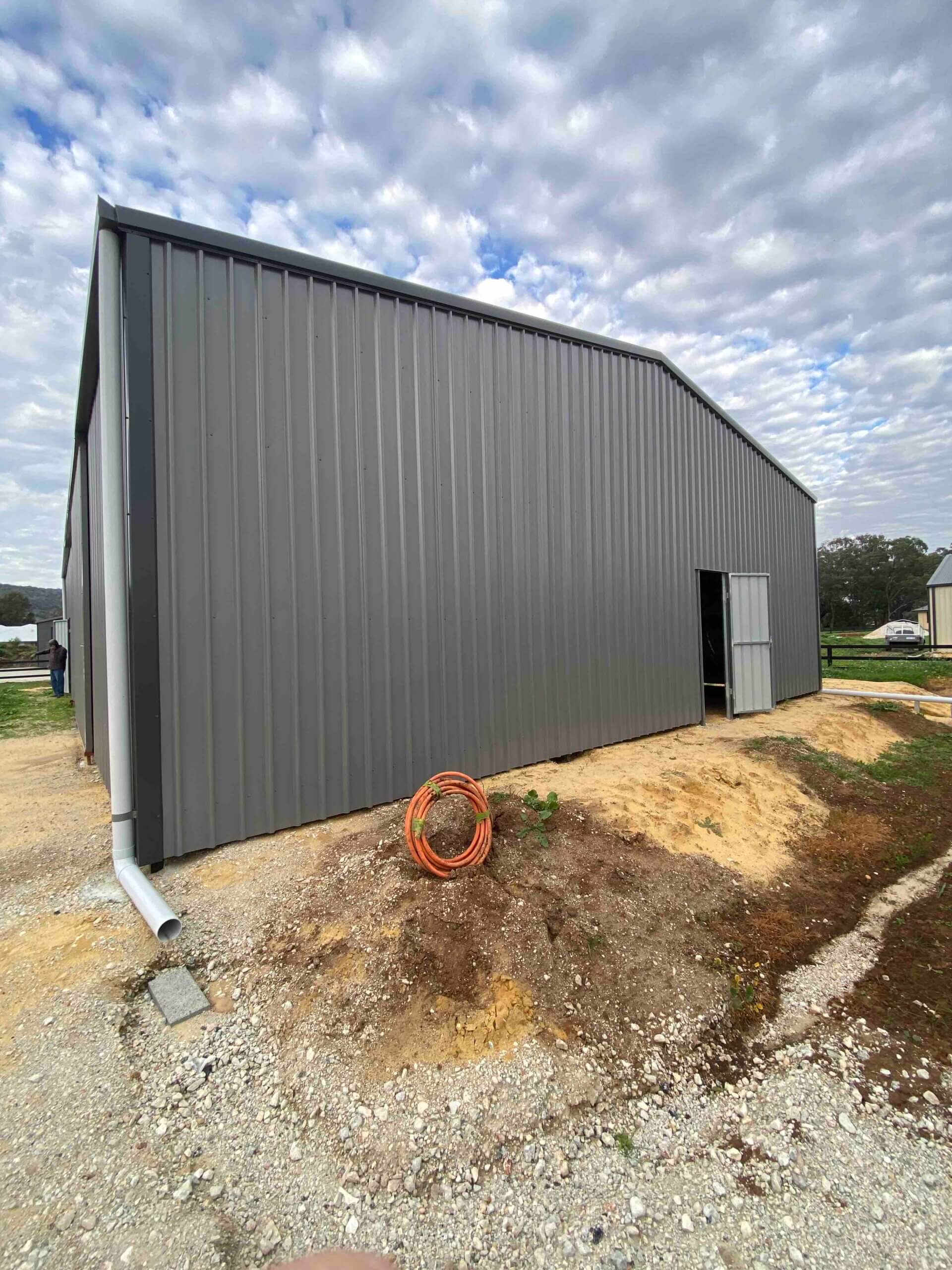
One circuit or a sub-board?
- One circuit from the house board suits a garden shed: an LED light or two, a couple of power points for the mower charger, the beer fridge and a drill. Cheapest, simplest, and fine up to a 20 A load.
- A sub-board suits anything you'd call a workshop, studio or gym: its own main switch in the shed, separate RCBOs for lights and power, a 15 A or 32 A outlet for the compressor or welder, a circuit for a split system. Costs more up front and means one fault in the shed doesn't take out the house, and you can add circuits later without another trench.
- A granny flat or studio is a sub-board plus the circuits a small home needs — aircon, cooking, hot water, smoke alarms — and a check that the house's supply can carry it all.
- Three-phase for a serious workshop: only if the house has it, and it changes the sub-main and the board.
Need an Electrician in Perth?
BOOK ONLINE TODAY
What's actually done on the day
- Site visit. The house switchboard (spare ways, RCD protection, main switch and maximum demand), the route for the trench, the shed's construction, and what you'll run in it now and later.
- Trench. From the house to the shed at the depth the Wiring Rules require for the conduit and cover used, avoiding reticulation, gas and the sewer (we locate services first).
- Conduit and cable. Orange heavy-duty conduit with cable sized for the load and the length — voltage drop over 40 m is real — and marker tape above it.
- House end. An RCBO for a single circuit, or a sub-main breaker for a sub-board, in the house switchboard.
- Shed end. Lights, points and outlets on the shed wall in weatherproof or surface-mount gear; a sub-board with main switch and RCBOs where you've chosen one; earthing at the shed as the rules require.
- Test and certify. Insulation resistance, earth continuity, polarity, RCD trip times; trench backfilled; your Electrical Safety Certificate follows.
A garden shed on a short run is a day; a workshop sub-board on a long run, one to two days.
The WA rules that apply
- Licensed contractor only. Running power to a shed is electrical work for a licensed electrical contractor (our licence is EC15449). An extension lead through a window is not an installation, and a permanent lead across the yard is the thing insurers refuse claims over.
- Underground, in conduit, at depth. AS/NZS 3000:2018 sets the burial depth and mechanical protection for underground cable; overhead runs to sheds are rarely appropriate on a residential block.
- RCD protection on every circuit to and in the shed.
- Earthing and bonding at the shed, particularly a steel shed.
- Voltage drop within the limits over the run length — the reason long runs use heavier cable.
- Maximum demand. A granny flat or heavy workshop has to fit within the house's Western Power connection, or the connection is upgraded.
- Electrical Safety Certificate for the work, within 28 days.
What pushes the price up (or down)
- Distance. Cable, conduit and trench, plus heavier cable on long runs.
- The trench route. Lawn is easy; paving, concrete and driveways aren't.
- What the shed needs. One circuit versus a sub-board with outlets.
- The house board. Spare way, extension or upgrade.
- Three-phase. Heavier sub-main and board.
- Extras. Sensor lights, weatherproof points, a data point to the shed office.
How Web X quotes shed power
Send a photo of the house switchboard, a photo of the shed, and a rough sketch of the route and distance — that's enough for a range; the fixed price follows a site visit because the trench decides a lot.
- Fixed price after the visit, $0 call-out fee.
- Trenching, conduit, backfill and the board work all in the one price.
- RCD protection, earthing, testing and the Electrical Safety Certificate included.
- Licensed electrical contractor EC15449, 300+ five-star Google reviews. See our shed power installation and underground cabling pages.
We power sheds across the Perth metro — Ellenbrook, Bullsbrook, Byford, Baldivis, Kalamunda, Wanneroo and everywhere between.
Ways to keep the cost down
- Plan the shed near the house board side if it isn't built yet.
- Dig the trench yourself if you're able — we'll mark the route and depth, and lay the conduit.
- Run the conduit before paving or a new lawn goes in.
- Choose a sub-board once rather than a circuit now and a second trench later.
- Bundle the sensor light, the weatherproof point and a data cable in the same trench.
Frequently asked questions
How much does it cost to run power to a shed in Perth?
About $900–$1,600 for a garden shed with lights and a couple of points on one underground circuit under 15 m from the house, and $1,800–$3,500 for a workshop with its own sub-board and a 15 A or 32 A outlet. Long runs and hard trenching add to it.
Can I run an extension lead to my shed instead?
For a drill on a Saturday, plug it in and unplug it after. As a permanent supply, no — leads across the yard fail, trip RCDs, and are what insurers point to after a shed fire. Proper power to a shed is not the big job people think it is.
Does the cable have to go underground?
On almost every residential block, yes — in conduit at the depth the Wiring Rules require, with marker tape. Overhead runs need clearances and supports that rarely suit a backyard.
Do I need a sub-board in the shed?
For a garden shed, no — one circuit does it. For a workshop, studio, gym or anything with a welder, compressor or air conditioner, a sub-board gives you separate circuits, a main switch in the shed and room to add more later.
How long does it take?
A day for a garden shed on a short run; one to two days for a workshop sub-board on a long run or with hard trenching.
Can I get three-phase in my shed?
If the house has three-phase supply, yes — a three-phase sub-main and board, adding $600–$1,500. If it doesn't, a Western Power connection upgrade comes first.
Can you power a granny flat or studio?
Yes — a sub-board with the circuits a small home needs, smoke alarms, and a check that the house's supply can carry it. $3,000–$6,000 depending on the run and the circuits, plus any switchboard upgrade at the house.
Written by Donny Mobin, licensed electrical contractor (EC15449) and owner of Web X Electricians Perth. Prices in this guide are from our own shed and underground power quotes and jobs across the Perth metro area in 2026, including GST.
Last updated 16 September 2026.
Ready to power your shed in Perth?
Call 0422 117 839 or request a free quote online. Fixed price after a site visit, $0 call-out fee, trench to certificate in one job. More on our shed power installation page.